Adventist pioneers and the Trinity doctrine
Sister White wrote that early Adventist pioneers are to bear their testimony as to what constitutes the truth for this time
1 because they have learned to avoid errors and dangers, and are they not then competent to give wise counsel
2? In their writings, we see their unanimous views regarding the personality of God, and that they have avoided the Trinitarian error. There is much to write about this topic because the Adventist pioneers left a lot of material dealing directly or indirectly with the doctrine of Trinity. But we will look at some of the testimonies from James White and brother Loughborough because we have read some of their articles on the personality of God. Also, we will compare their testimony with the Spirit of Prophecy as we have done so far.
James White, in the Review and Herald, listed some of the popular fables of the age
”, saying: “Here we might mention the Trinity, which does away the personality of God, and of his Son Jesus Christ, and of sprinkling or pouring instead of being ‘buried with Christ in baptism,’ ‘planted in the likeness of his death:’ but we pass from these fables to notice one that is held sacred by nearly all professed Christians, both Catholic and Protestant. It is, the change of the Sabbath of the fourth commandment from the seventh to the first day of the week.
James S. White, Review & Herald, December 11, 1855, p. 85.15
What does James White mean when he says that the Trinity does away with the personality of God, and of his Son Jesus Christ
? In Day Star, he wrote:
Quotation:…a certain class who deny the only Lord God and our Lord Jesus Christ. This class can be no other than those who spiritualize away the existence of the Father and the Son, as two distinct, literal, tangible persons, also a literal Holy city and throne of David… The way spiritualizers this way have disposed of or denied the only Lord God and our Lord Jesus Christ is first using the old unscriptural trinitarian creed, viz, that Jesus Christ is the eternal God, though they have not one passage to support it, while we have plain scripture testimony in abundance that He is the Son of the eternal God.
James White, Day Star, Jan 24, 1846
Doing away with the personality of God and His Son is accomplished by denying Them as two distinct, literal, and tangible persons. The doctrine on the personality of God teaches that the Father has a literal, tangible person.
In the Adventist Review and Sabbath Herald article from April 4, 1854, James White listed 10 points of Catholic reasons for keeping Sunday”, where he said that the Sunday is a day dedicated by the apostles to the honor of the most Holy Trinity
The Advent Review, and Sabbath Herald, vol. 5 April 4, 1854, p. 86. Here we also see the harmony between J. B. Frisbie and James White in their view that the Sabbath is dedicated to the biblical God expressed in the first point of the Fundamental Principles, and Sunday is dedicated to the trinity God. The main problem with the Trinity doctrine is that it does away the personality of God, and of his Son Jesus Christ
. In Life Incidents, he wrote more about why this is so.
Quotation:Jesus prayed that his disciples might be one as he was one with his Father. This prayer did not contemplate one disciple with twelve heads, but twelve disciples, made one in object and effort in the cause of their Master. Neither are the Father and the Son parts of the ‘three-one God.’3 They are two distinct beings, yet one in the design and accomplishment of redemption. The redeemed, from the first who shares in the great redemption, to the last, all ascribe the honour, and glory, and praise, of their salvation, to both God and the Lamb.
James S. White, Life Incidents, p.343.2
Sister White wrote similarly regarding Christ’s prayer:
Ellen G. White:The burden of that prayer was that His disciples might be one as He was one with the Father; the oneness so close that, although two distinct beings, there was perfect unity of spirit, purpose, and action. The mind of the Father was the mind of the Son.
Lt1-1882.1; 1882
Ellen G. White:The unity that exists between Christ and His disciples does not destroy the personality of either. They are one in purpose, in mind, in character, but not in person. It is thus that God and Christ are one.
MH, 421 422; 1905
The Father and the Son do not comprise one person nor being. The Father and the Son are one, just as Christ and His disciples are one—one in spirit, purpose, mind, and character.
Many Adventist trinitarian scholars charge James White and other early pioneers for arianism or semi-arianism, claiming that they made Christ inferior to the Father. This is not true. Let us read the testimony of James White on this matter.
Quotation:Paul affirms of the Son of God that he was in the form of God, and that he was equal with God. ‘Who being in the form of God thought it not robbery to be equal with God.’ Phil. 2:6. The reason why it is not robbery for the Son to be equal with the Father is the fact that he is equal. If the Son is not equal with the Father, then it is robbery for him to rank himself with the Father.
Quotation:The inexplicable trinity that makes the godhead three in one and one in three, is bad enough; but that ultra Unitarianism that makes Christ inferior to the Father is worse. Did God say to an inferior, Let us make man in our image?’
James S. White, The Advent Review and Sabbath Herald, November 29, 1877, p. 171
The problem of the Adventist trinitarian scholars lies in that they themselves cannot completely explain Christ’s divinity other than through the Trinitarian paradigm. Adventist pioneers did believe in Christ’s full divinity but they rejected the Trinity because it destroys the personality of God. The inexplicable trinity that makes the godhead three in one and one in three, is bad enough
. Below is another statement from James White where he compared Seventh-day Adventist with Seventh-day Baptist belief. Seventh-day Adventists did not believe in the Trinity unlike Seventh-day Baptists. James White mentioned that, regarding the divinity of Christ, Seventh-day Adventists hold so nearly with the trinitarian Seventh-day Baptists that they apprehend no trial there.
Quotation:The principal difference between the two bodies is the immortality question. The S. D. Adventists hold the divinity of Christ so nearly with the trinitarian, that we apprehend no trial here. And as the practical application of the subject of the Gifts of the Spirit to our people and to our work is better understood by our S. D. Baptist brethren, they manifest less concern for us on this account.
James S. White, The Advent Review and Sabbath Herald, October 12, 1876, p. 116
This evidence should raise questions to each Adventist trinitarian scholar. How could it be that the Adventist pioneers adhere to the divinity of Christ as trinitarians did, yet rejected the Trinity doctrine? In which way was Christ fully divine, if He was not part of an amalgamated three-in-one God? The answer is simple and completely Biblical. Christ is fully divine, just as His Father, because He was begotten in the express image of the Father’s person; thus, He inherited complete divine nature from His Father.
Ellen G. White:A complete offering has been made; for ‘God so loved the world, that he gave his only-begotten Son,’—not a son by creation, as were the angels, nor a son by adoption, as is the forgiven sinner, but a Son begotten in the express image of the Father’s person, and in all the brightness of his majesty and glory, one equal with God in authority, dignity, and divine perfection. In him dwelt all the fullness of the Godhead bodily.
ST May 30, 1895, par. 3; 1895
Christ's complete divinity is not based on an amalgamated personality of God, but rather on His Sonship with the Father. The Bible never refers to Christ with the term “one God”—only the Father is referred to with the term “one God”4 5. Jesus, the Son of God, is fully divine but is not referred to as one God, a personal, spiritual being
in the first point of the Fundamental Principles.
Ellen G. White:The Lord Jesus Christ, the only begotten Son of the Father, is truly God in infinity, but not in personality.
Ms116-1905.19; 1905
Brother J. N. Loughborough was asked to answer the question, What serious objection is there to the doctrine of the Trinity?
The question was asked by Brother W. W. Giles and it was sent to James S. White, who forwarded the question to Brother John N. Loughborough.. As we read his answer, let us try to understand some of the reasons why the early pioneers did not adhere to this doctrine.
Quotation:There are many objections which we might urge, but on account of our limited space we shall reduce them to the three following: 1. It is contrary to common sense. 2. It is contrary to scripture. 3. Its origin is Pagan and fabulous.
Quotation:These positions we will remark upon briefly in their order. And 1. It is not very consonant with common sense to talk of three being one, and one being three. Or as some express it, calling God ‘the Triune God,’ or ‘the three-one-God.’ If Father, Son, and Holy Ghost are each God, it would be three Gods; for three times one is not one, but three. There is a sense in which they are one, but not one person, as claimed by Trinitarians
.
Quotation:2. It is contrary to Scripture. Almost any portion of the New Testament we may open which has occasion to speak of the Father and Son, represents them as two distinct persons. The seventeenth chapter of John is alone sufficient to refute the doctrine of the Trinity. Over forty times in that one chapter Christ speaks of his Father as a person distinct from himself. His Father was in heaven and he upon earth. The Father had sent him. Given to him those that believed. He was then to go to the Father. And in this very testimony he shows us in what consists the oneness of the Father and Son. It is the same as the oneness of the members of Christ’s church. ‘That they all may be one; as thou, Father, art in me, and I in thee, that they also may be one in us; that the world may believe that thou hast sent me. And the glory which thou gavest me I have given them; that they may be one, even as we are one.’ Of one heart and one mind. Of one purpose in all the plan devised for man’s salvation. Read the seventeenth chapter of John, and see if it does not completely upset the doctrine of the Trinity.
Quotation:To believe that doctrine, when reading the scripture we must believe that God sent himself into the world, died to reconcile the world to himself, raised himself from the dead, ascended to himself in heaven, pleads before himself in heaven to reconcile the world to himself, and is the only mediator between man and himself. It will not do to substitute the human nature of Christ (according to Trinitarians) as the Mediator; for Clarke says, ‘Human blood can no more appease God than swine’s blood.’ Comment on 2 Samuel 21:10. We must believe also that in the garden God prayed to himself, if it were possible, to let the cup pass from himself, and a thousand other such absurdities.
Quotation:Read carefully the following texts, comparing them with the idea that Christ is the Omnipotent, Omnipresent, Supreme, and only self-existent God: John 14:28; 17:3; 3:16; 5:19, 26; 11:15; 20:19; 8:50; 6:38; Mark 13:32; Luke 6:12; 22:69; 24:29; Matthew 3:17; 27:46; Galatians 3:20; 1 John 2:1; Revelation 5:7; Acts 17:31. Also see Matthew 11:25, 27; Luke 1:32; 22:42; John 3:35, 36; 5:19, 21, 22, 23, 25, 26; 6:40; 8:35, 36; 14:13; 1 Corinthians 15:28, etc.
Quotation:The word Trinity nowhere occurs in the Scriptures. The principal text supposed to teach it is 1 John 1:76, which is an interpolation. Clarke says, ‘Out of one hundred and thirteen manuscripts, the text is wanting in one hundred and twelve. It occurs in no MS. before the tenth century. And the first place the text occurs in Greek, is in the Greek translation of the acts of the Council of Lateran, held A. D. 1215.’ - Comment. on John 1, and remarks at close of chap.
Quotation:3. Its origin is pagan and fabulous. Instead of pointing us to scripture for proof of the trinity, we are pointed to the trident of the Persians, with the assertion that by this they designed to teach the idea of a trinity, and if they had the doctrine of the trinity, they must have received it by tradition from the people of God. But this is all assumed, for it is certain that the Jewish church held to no such doctrine. Says Mr. Summerbell, ‘A friend of mine who was present in a New York synagogue, asked the Rabbi for an explanation of the word ’elohim’. A Trinitarian clergyman who stood by, replied, ‘Why, that has reference to the three persons in the Trinity,’ when a Jew stepped forward and said he must not mention that word again, or they would have to compel him to leave the house; for it was not permitted to mention the name of any strange god in the synagogue.’7 Milman says the idea of the Trident is fabulous. (Hist. Christianity, p.34.)
Quotation:This doctrine of the trinity was brought into the church about the same time with image worship, and keeping the day of the sun, and is but Persian doctrine remodeled. It occupied about three hundred years from its introduction to bring the doctrine to what it is now. It was commenced about 325 A. D., and was not completed till 681. See Milman’s Gibbon’s Rome, vol. iv, p.422. It was adopted in Spain in 589, in England in 596, in Africa in 534. - Gib. vol. iv, pp.114,345; Milner, vol. i, p.519.
John N. Loughborough, The Adventist Review, and Sabbath Herald, November 5, 1861, p. 184
Brother Loughborough was the son of a Methodist minister and he was raised with the belief in the doctrine of Trinity. Besides the reasons he mentioned, he does not adhere to this doctrine because it is not in harmony with the truth on the personality of God. The seventeenth chapter of John is in harmony with the truth on the personality of God taught and practiced by the Seventh-day Adventists; the Trinity doctrine is not.
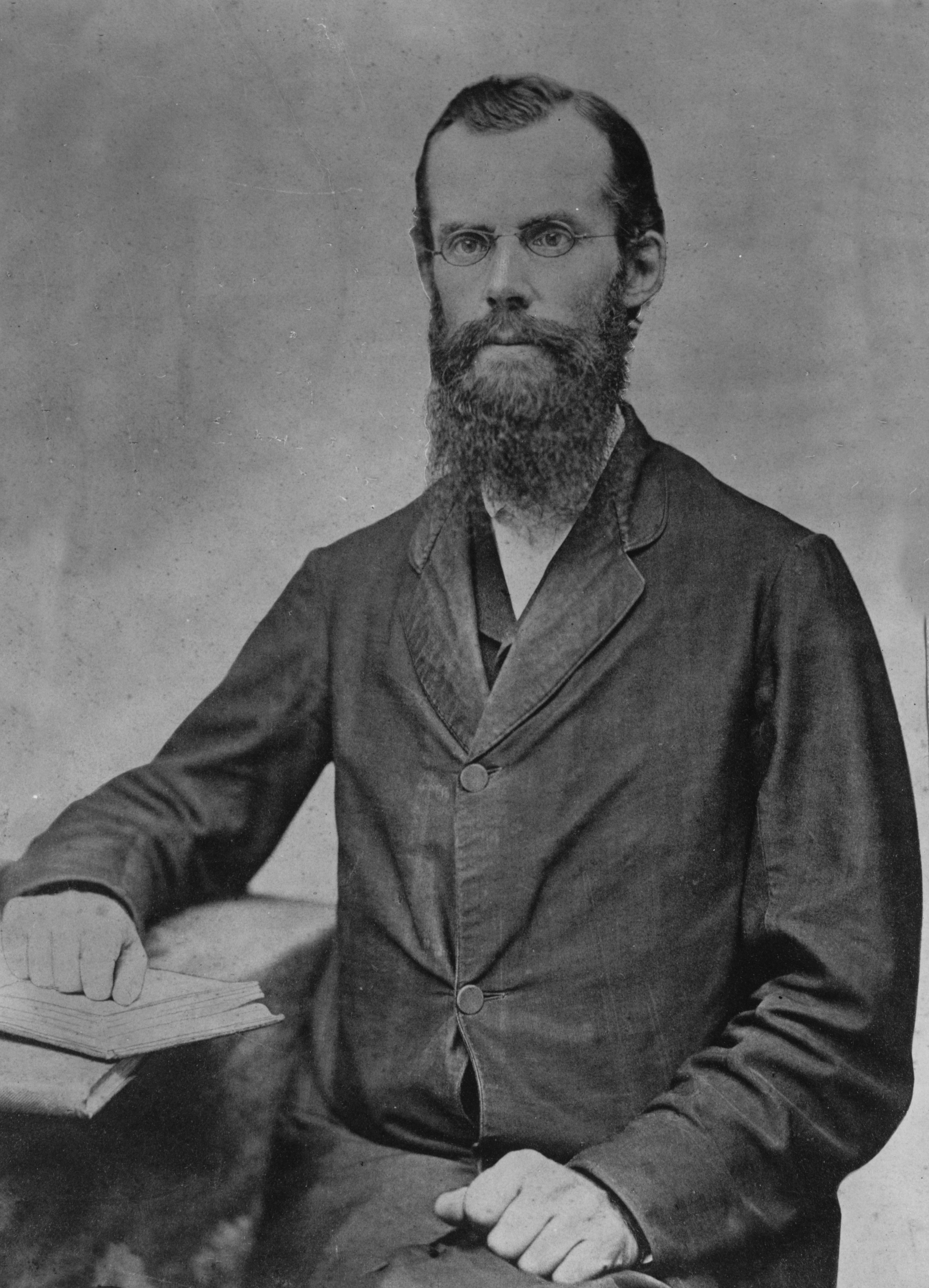
J. N. Andrews said, The doctrine of the Trinity which was established in the church by the council of Nicea, A. D. 325. This doctrine destroys the personality of God, and his Son Jesus Christ our Lord...
John. N. Andrews, The Advent Review and Sabbath Herald, March 6, 1855, p. 185
In the context of the trinitarian understanding of the personality of God, it is safe to say that the personality of God, or the quality or state of God being a person, in any understanding of Trinity doctrine is a mystery. The problem is that there is no clear view of who is that one God who is a person? The underlying claim is made that God is One yet Three, or One in Three; yes, God is a person, and He is one, yet simultaneously He is three persons. This view can never hold any clear perception of the personality of God. Also, it will deny the clearest testimony of the Scriptures that the one God is the Father, and that Christ is truly His only begotten Son. Most trinitarian brothers would agree that Christ is a real and definite being but if a trinitarian were to accept the Father as a real and definite Being, he would also need to accept the Holy Spirit as a real and definite being, thus denying the Holy Spirit as being a spirit, the means by which the Father and Son are omnipresent. Conversely, if a trinitarian accepted the Holy Spirit to be a literal spirit, having no body nor form, then he would deny the Father to be a real, definite being. In conversation over the quality or state of God being a person, there is never a clear view of the matter with promoters of the Trinity doctrine; it is subterfuge. ‘Subterfuges’ is a word Sister White used to describe the deception by artifice or stratagem in order to conceal, escape, or evade8 the truth; in other words, something that you cannot grab by head or tail. This is the primary reason Sister White did not engage in the Trinity discussion that would come up in the Seventh-day Adventist Church.
Ellen G. White:I was cautioned not to enter into controversy regarding the question that will come up over these things, because controversy might lead men to resort to subterfuges, and their minds would be led away from the truth of the Word of God to assumption and guesswork. The more that fanciful theories are discussed, the less men will know of God and of the truth that sanctifies the soul.
Lt232-1903.41; 1903
When we read the works of Seventh-day Adventist pioneers on the personality of God, we see that they did not fall into the Trinity trap. Their non-trinitarian views of God were not due to ignorance, but a knowledge of the truth on the personality of God. They were of keen and noble intellect, understanding the thin line between the truth and error. Their understanding of the personality of God is balanced and solid, strongly supported by the plain and simple “thus says the Lord”.
Many Adventists today accept the Trinity doctrine because Ellen White supposedly accepted it and promoted it. This is far from the truth and such a conclusion is predicated on lacking knowledge of the Spirit of Prophecy. If anyone was acquainted with the beliefs of Sister White, it was her husband James White. Here is what he has to say about the writings of his wife:
Quotation:We invite all to compare the testimonies of the Holy Spirit through Mrs. W., with the word of God. And in this we do not invite you to compare them with your creed. That is quite another thing. The trinitarian may compare them with his creed, and because they do not agree with it, condemn them. The observer of Sunday, or the man who holds eternal torment an important truth, and the minister that sprinkles infants, may each condemn the testimonies’ of Mrs. W. because they do not agree with their peculiar views. And a hundred more, each holding different views, may come to the same conclusion. But their genuineness can never be tested in this way.
James S. White, The Advent Review, and Herald of the Sabbath, June 13, 1871
James White was the closest associate of Ellen White, the person who was one with her in God’s uplifting of the Seventh-day Adventist Church. We have a clear and direct testimony from him that Ellen White’s writings are not trinitarian. Today, scholars put a false narrative that Ellen White grew in her understanding of the Trinity doctrine, and eventually accepted and preached it. But we see that Ellen White did not change her standpoint on the personality of God nor did she adhere to the Trinity doctrine. She was unambiguous in her claim that she never did. When the Kellogg crisis came over the personality of God, she remained firm in her view, just as all early Seventh-day Adventist pioneers did—and her dealings with Dr. Kellogg prove that. It is true, the Trinity doctrine cannot be accepted by those who are loyal to the faith and to the principles that have withstood all the opposition of satanic influences.9 Today’s official narrative that Ellen White was teaching the Trinity echoes Dr. Kellogg’s claim that the Living Temple taught the same thing as Ellen White. But God forbid that this sentiment should prevail.
10
The pioneers stood most earnestly
Against belief in trinity.
They saw this doctrine did disguise,
What Scripture shows discerning eyes.
James White declared this fable led
To errors that were then widespread
For three co-equal beings merged
Into one God, must not be urged.
Two separate persons were aligned,
In spirit, action, goal and mind.
For just as men in Christ are one,
So are the Father and the Son.
Distinct They are, divinity,
It’s not the same as trinity
God’s Spirit sent from up above,
The active agent of God’s love.
Nicaea’s creed had been prepared.
No Scripture says what men declared,
Inspired truth they had not heard.
They’d never read it in God’s Word.
John seventeen great truths reveal,
Before the one true God we kneel
Eternal life comes through His Son
Our Savior, the Begotten One.
Christ is divine, the Son of God
We worship Him, with honor laud.
The express image of God’s face,
Inherits fullness of His grace.
The pioneers knew, God’s word is clear,
The great Almighty God so dear.
As personal, He reigns on high,
His Spirit in us, ever nigh.
The truth stands fast in error’s night,
Preserved by God through Sister White.
The pioneers shunned the mystery thought,
For through the scriptures, they were taught.
Notes
- 1
- 2
- 3The same quotation is found in James White’s book “The Law and the Gospel” with one difference. He states, “Neither are the Father and the Son parts of one being”; in “Life Incidents”, he wrote “parts of the ‘three-one God’”. See James S. White, The Law and the Gospel p. 1.2. ↩
- 4John 17:3; 1. Corinthians 8:6; 1. Timothy 2:5; Ephesians 4:6 ↩
- 5We study Christ’s complete divinity in-depth in the second book of the Forgotten Pillar Project - “Rediscovering the Pillar” ↩
- 6J. N. Loughborough made a typo in the original document, he wanted to point out to 1 John 5:7 ↩
- 7Discussion between Summerbell and Flood on Trinity, p.38. ↩
- 8The Merriam-Webster, ‘subterfuges’ - “deception by artifice or stratagem in order to conceal, escape, or evade” ↩
- 9
Patchwork theories cannot be accepted by those who are loyal to the faith and to the principles that have withstood all the opposition of satanic influences
Lt253-1903.28; 1903 ↩ - 10