The constructive criticism
The first point of the Fundamental Principles answers the questions: who is God, what is His personality, and how do we understand His presence?
Quotation:I. That there is one God, a personal, spiritual being, the creator of all things, omnipotent, omniscient, and eternal; infinite in wisdom, holiness, justice, goodness, truth, and mercy; unchangeable, and everywhere present by his representative, the Holy Spirit. Ps. 139:7.
FP1889 147.2; 1889
The one God, the Creator, is identified as the Father, because the second point of the Fundamental Principles states that Jesus Christ, the Son of the Eternal Father, is the one by whom God created all things1. The personality of God is expressed in the term “personal spiritual being”. We will soon see that this term denotes that the Father has a material body, a physical manifestation. Thus, in His personality, He is present only where He dwells physically. But, His presence is not constrained to His personality because He is everywhere present by his representative, the Holy Spirit
. During our past history, this understanding and reasoning of the personality of God, as expressed in the first point of the Fundamental Principles, received constructive criticism; by “constructive criticism” we refer to the criticism supported by the Bible.
We now present to you the following citations, some constructive criticism, from a prominent trinitarian brother in the Seventh-day Adventist world. Interestingly, he had acknowledged the authority of the Fundamental Principles, yet simultaneously believed in the Trinity doctrine. We find this document a very important element in the change of our beliefs from the fundamental principles to current Seventh-day Adventist Trinitarian belief.
This prominent brother was met with the question, “Do you not believe in a personal, definite God?”:
Quotation:Most certainly. An infinite, divine, personal being is essential religion. Worship requires someone to love, to obey, to trust. Belief in a personal God is the very core of the Christian religion. The conception of God as the All-Energy, the infinite Power, an all-pervading Presence, is too vast for the human mind to grasp; there must be something more tangible, more restricted, upon which to center the mind in worship. It is for this reason that Christ came to us in the image of God's personality, the second Adam, to show us by his life of love and self-sacrifice the character and the personality of God. We can approach God only through Christ.
Quotation:‘Who being the brightness of his glory, and the express image of his person, and upholding all things by the word of his power, when he had by himself purged our sins, sat down on the right hand of the Majesty on high.’
Quotation:‘Who being the effulgence of his glory, and the impress of his substance, and upholding all things by the word of his power.’
Quotation:The apostle says, ‘But we all, with open face beholding as in a glass the glory of the Lord, are changed into the same image from glory to glory, even as by the Spirit of the Lord.’ 2 Cor. 3: 18. How apt and beautiful is this figure!... So, in beholding Christ in his miracles, his temptations, his exhortations, his life of self-abnegation, his ‘going about doing good,’ we may behold the personality and power of God. And what a great hope there is for us in the fact that in Christ we find qualities not strange and foreign to humanity, but kindred mental and moral characteristics; so that we are able to see and grasp an actual, rather than merely a theological or abstract or figurative truth, in the declaration of the apostle, ‘Now are we the sons of God.’ 1 John 3:2.
Quotation:The fact that God is so great that we cannot form a clear mental picture of his physical appearance need not lessen in our minds the reality of His personality, neither does this conception disagree with that of a special expression of God in some particular form or place. Indeed, there are scriptures which present God in this definite, and one may say circumscribed, form as sitting upon a throne in heaven, or as dwelling in the temple at Jerusalem, 1. Kings 22:19; Ps. 11:4; Matt. 21:12, 13.
Quotation:The human mind is finite and cannot grasp infinity. We naturally desire to form a definite, clearly defined conception of the being whom we worship. The Bible supplies this human need as well as all other of our spiritual requirements, and in the fortieth chapter of Isaiah the prophet deals with this question of God's personal appearance in a marvelous way. ‘O Jerusalem, that bringest good tiding, lift up thy voice with strength; lift it up, be not afraid; say unto the cities of Judah, Behold your God! He shall feed his flock like a shepherd: he shall gather the lambs in his arms, and carry them in his bosom.’
Quotation:‘Who hath measured the waters in the hollow of his hand, and meted out heaven with the span, and comprehended the dust of the earth in a measure, and weighed the mountains in scales, and the hills in a balance? To whom then will ye liken God? Or what likeness will ye compare unto him? Have ye not known? have ye not heard? hath it not been told you from the beginning? have ye not understood from the foundations of the earth? It is he that sitteth upon the circle of the earth, and the inhabitants thereof are as grasshoppers; that stretcheth out the heavens as a curtain, and spreadeth them out as a tent to dwell in: To whom then will ye liken me, or shall I be equal? saith the Holy One. Lift up your eyes on high, and behold who hath created these things, that bringeth out their host by number: he calleth them all by names by the greatness of his might, for that he is strong in power; not one faileth. Hast thou not known? hast thou not heard, that the everlasting God, the Lord, the Creator of the ends of the earth, fainteth not, neither is weary? There is no searching of his understanding. He giveth power to the faint and to them that have no might he increaseth strength. Even the youths shall faint and be weary, and the young men shall utterly fall: but they that wait upon the Lord shall renew their strength; they shall mount up with wings as eagles; they shall run, and not be weary; and they shall walk, and not faint.’ Isa. 40:9,11,12,18,21,22,25,26,28-31.
Quotation:Here is a most marvelous description of God. His hand, his arm, his bosom are mentioned. He is described as ‘sitting on the circle of the earth,’ he metes out heaven with the span, he holds the waters in the hollow of his hand; so there can be no question that God is a definite, real, personal being. A mere abstract principle, a law, a force could not have a hand, an arm. God is a person, though too great for us to comprehend, as Job says, ‘God is great and we know him not.’ Job 36:26...
Quotation:This great being is represented as sitting on the circle of the earth. The orbit of the earth is nearly two hundred million miles in diameter. A being so great as to occupy a seat of such proportions is quite beyond our comprehension as regards his form. The prophet recognizes this, and so diverts our attention away from speculation respecting the exact size and form of God by showing us the absurdity of trying to form even a mental image, intimating that this is closely akin to idolatry. See verses 18-21. He then shows us where to find a true conception of God, pointing us to the things which he has made: ‘Lift up your eyes on high and behold who hath created these things.’ This also was Paul's idea : ‘For the invisible things of him from the creation of the world are clearly seen, being understood by the things that are made, even his eternal power and Godhead; so that they are without excuse.’ Rom. 1:20.
Quotation:Discussions respecting the form of God are utterly unprofitable, and serve only to belittle our conceptions of him who is above all things, and hence not to be compared in form or size or glory or majesty with anything which man has ever seen or which it is within his power to conceive. In the presence of questions like these, we have only to acknowledge our foolishness and incapacity, and bow our heads with awe and reverence in the presence of a Personality, an Intelligent Being to the existence of which all nature bears definite and positive testimony, but which is as far beyond our comprehension as are the bounds of space and time.
As mentioned before, this brother acknowledges the Fundamental Principles, yet believes in the Trinity. Here is a short summary of His constructive criticism regarding the personality of God: God is a definite, real, personal being, having a form—Indeed, there are scriptures which present God in this definite, and one may say circumscribed, form as sitting upon a throne in heaven
. He advocates this because he believes it is necessary for us, finite human beings, to have a definite object of worship. But he expands the idea of a “circumscribed God by the testimony from Isaiah chapter 40, which proves that God isbeyond our comprehension as regards his form
. Any kind of conceptualization of God’s being, in any form, is akin to idolatry. Discussions respecting the form of God are utterly unprofitable
. The true matter of the personality of infinite God is beyond our comprehension. God’s true personality is more than a mystery to our finite minds. This is because God isfar beyond our comprehension as are the bounds of space and time
. For this brother, understanding God’s personality merely as a definite being is in one way true, but in another way false. It is true that God presented Himself in particular form or place
, because there must be something more tangible, more restricted, upon which to center the mind in worship
. A simple understanding of God as a definite and tangible being is restrictive for God. The summary of his criticism is that we should form our conceptions of God outside of the bounds of space and time
.
Please, candidly examine the reasons behind this brother’s faith. The reasoning behind his arguments is important to understand because it played an important role in Seventh-day Adventist history, as a bold step away from the Fundamental Principles. These arguments are not trivial; they are very persuasive and we urge you to their contemplation. Perhaps you might agree with them, but please allow us to unmask the deception. These citations are from Dr. Kellogg’s book “The Living Temple”2. From the section titled “Infinite Intelligence a Personal being”, pages 29 to 33, the passages express Kellogg’s position on the personality of God, which was the main problem with his book.
That which you just read was exactly what Sister White referred to when she said: I have some things to say to our teachers in reference to the new book The Living Temple. Be careful how you sustain the sentiments of this book regarding the personality of God. As the Lord presents matters to me, these sentiments do not bear the endorsement of God. They are a snare that the enemy has prepared for these last days...
3
In the present Seventh-day Adventist controversy over the Trinity doctrine, we have personally been trying to shift the controversy from the Trinity doctrine to the personality of God. We’ve presented the position of the first point of the Fundamental Principles and have encountered arguments that greatly overlap with Dr. Kellogg’s sentiment on the personality of God, advocated in “Living Temple”. We’ve seen this repeatedly. When the focus is drawn from the Trinity issue to the personality of God, Kellogg’s views regarding the personality of God frequently echoe from the lips of Trinitarian advocates. The quality or state of God being a person is a mystery in the Trinity doctrine, and often Kellogg’s sentiment on the personality of God resonates with Trinitarian understanding of God’s person.
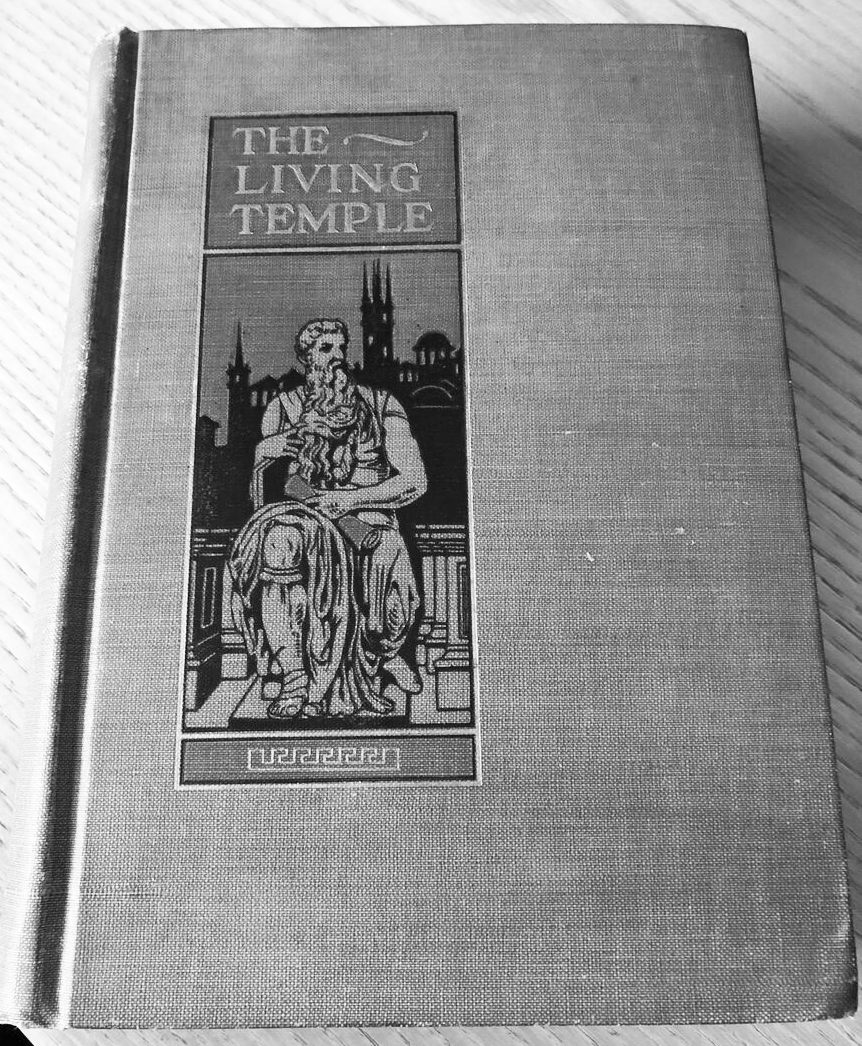
Some people find Dr. Kellogg’s understanding of God’s personality resonates with their understanding, yet they are tempted to think that there are other things objectionable with the Living Temple. The following evidence suggests the very opposite. There is a letter from Dr. Kellogg to William C. White, where Dr. Kellogg proposes to cutting out a few leaves
from the three thousand copies of the Living Temple—those very leaves containing the specially objectionable things appear, such as the comment on Isaiah 40
and the sentiments regarding the personality of God (the pages we have read).
Quotation:The Sanitarium has on hand, I find, two or three thousand books which were sold, but which have come back since the book was condemned. The question has been raised, what shall be done with these? It has occurred to me that perhaps they might be saved by cutting out a few leaves in which the specially objectionable things appear, such as the comment on Isaiah 40, which I borrowed from A.T. Jones, and the page on which the unfortunate heading appears, ‘The Personality of God,’ and tipping in leaves embodying a clear statement of the Bible view of God as a person presented in Elder Haskell’s article in the ‘Review’ a few weeks ago. These books would be sold to old patients who are making a great demand for the book for Christmas presents…
Letter from Dr. J.H. Kellogg to W.C.White; December 6, 1903, Chicago
What is the real issue with the reasoning in the Living Temple? We will study the matter to its very depth; superficially, we clearly see that the issue is the stepping off of the foundation of our faith—the Fundamental Principles—regarding the personality of God and where His presence is.
Ellen G. White:I have been instructed by the heavenly messenger that some of the reasoning in the book, ‘Living Temple’, is unsound and that this reasoning would lead astray the minds of those who are not thoroughly established on the foundation principles of present truth. It introduces that which is naught but speculation in regard to the personality of God and where His presence is.
SpTB02 51.3; 1904
Dr. Kellogg introduced the thought which is naught but speculation in regard to the personality of God
, by which he stepped off of the foundation of our faith—the Fundamental Principles. Discordance between Dr. Kellogg’s teaching and the Fundamental Principles is in the first statement of the principles where we are taught thatThat there is one God, a personal, spiritual being, the creator of all things, ... and everywhere present by his representative, the Holy Spirit. Ps. 139:7.
Sister White directly warned us of the sentiments expressed in the Living Temple regarding the personality of God. They are not in harmony with the first point of the Fundamental Principles, which were part of the foundation of our faith.
Ellen G. White:I have had to write much concerning the strange doctrines and theories expressed in Living Temple. Were these theories accepted by our people, the strong pillars of our faith and the truths that have made Seventh-day Adventists what they are would be swept away. I have had to show the fallacy of these doctrines, presenting them as a species of last-day heresy. We are told by the Word of God that just such teaching will be brought in at this time.
Lt250-1903.2; 1903
Today we witness the widespread acceptance of Kellogg’s theories regarding the personality of God. The fact that the first point of the Fundamental Principles is no longer present in our beliefs proves that Kellogg’s theories regarding the personality of God have had an influence in shaping our beliefs.
Ellen G. White:One and another come to me, asking me to explain the positions taken in “Living Temple.” I reply, “They are unexplainable.” The sentiments expressed do not give a true knowledge of God. All through the book are passages of scripture. These scriptures are brought in in such a way that error is made to appear as truth. Erroneous theories are presented in so pleasing a way that unless care is taken, many will be misled.
SpTB02 52.1; 1904
The error is being made to appear as truth, and many are misled.
It is worth emphasizing, for some careless reader, that the real issue of Dr. Kellogg, and his book “Living Temple”, is not the Trinity but the small step he took off of the Fundamental Principles. In order to understand the real issue of his book, it would be wrong to focus on its overlapping sentiments with the Trinity doctrine. Rather, we should focus on the point that constituted this small step he made; and this includes having a deep understanding of the fundamental principles just as our pioneers had. Who better to ask than the Adventist pioneers themselves?
A person, God in heav’n, enthroned,
In this our founding truths were zoned.
All-Present by His Spirit’s might,
These truths stood as our guiding light.
False words that seemed so wise and deep,
A subtle shift made faithful weep.
"God’s form beyond all thought," they claimed,
This mystery could not be named.
"Discussions of God’s form," he said,
"Are futile paths that lie ahead."
Yet this deceit, so smoothly spun,
Was Satan’s snare, and souls were won.
The error dressed as truth so fair,
And twisted in a clever snare.
Just One small step from truths we held,
By One giant leap our faith was felled.
Beware the mind that seems too wise,
To see deception in disguise.
The truth is—God is personal
This truth the Doctor would conceal.