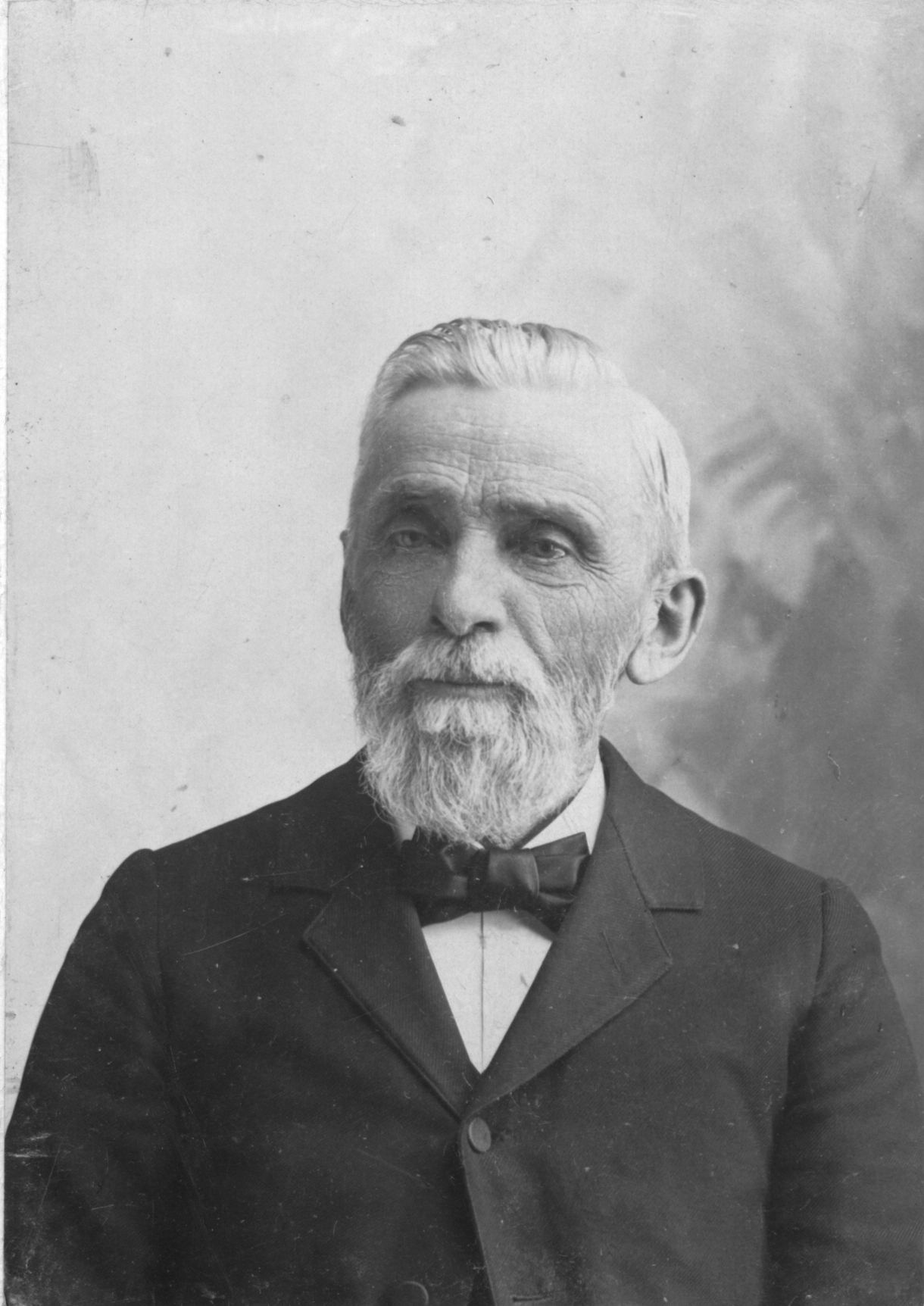
Is God a person? - by John N. Loughborough
One of the earliest articles on the personality of God is Loughborough’s article “Is God a person?” where he discusses the personality of God and His presence. It is important to remember the definition of ‘personality’ according to the Merriam-Webster dictionary: “the quality or state of being a person”1. We will look carefully at how Loughborough sees the quality or state of God being a person.
Quotation:Whatever may be the truth in this matter, it certainly cannot be wrong for us to examine what the Word says respecting it. Many there are that would refrain from the investigation of unpopular truths because the cry of heresy is raised against them. We shall not consider ourselves subjects of the appellation, neither are we prying into the secrets of the Almighty, as we pursue the investigation of this matter. The Bible certainly contains testimony upon this point, and we again repeat, ‘Things which are revealed belong to us.’ We inquire then, What saith the Scripture?
Quotation:The very testimony we have been examining in regard to man’s being formed of the dust in the image of God, proves conclusively that God has a form, although the sentiment is contrary to what we have been taught, while children, from the catechism:
Quotation:Question. ‘What is God?’
Quotation:Answer. ‘An infinite and eternal spirit; one that always was and always will be.’
Quotation:Q. ‘Where is God?’
Quotation:A. ‘Everywhere.’
Quotation:But we inquire, Is not God in one place more than another? Oh no, say you: the Bible says he is a spirit, and if so he must be everywhere alike. Well, if when man dies his spirit goes to God, it must go everywhere. But the Bible certainly represents God as located in heaven. ‘For he hath looked down from the height of his sanctuary: from heaven did the Lord behold the earth.’ Psalm 102:19. Then certainly heaven cannot be everywhere, for God is represented as looking down from it. ‘Elijah went up by a whirlwind into heaven.’ 2 Kings 2:11. But, says one, does not the Bible represent God as everywhere present? Psalm 139:8, 9, 10. ‘If I ascend up into heaven, thou art there: if I make my bed in hell, behold, thou art there; if I take the wings of the morning, and dwell in the uttermost parts of the sea, even there shall thy hand lead me, and thy right hand shall hold me.’
Quotation:We reply, the subject is introduced in verse 7, as follows: ‘Whither shall I go from thy Spirit? or whither shall I flee from thy presence?’ The Spirit is God’s representative. His power is manifested wherever he listeth, through the agency of his Spirit. Christ, when giving the commission to the disciples, says, ‘Go ye into all the world, and preach the gospel to every creature, and lo! I am with you alway, even unto the end of the world.’ Now, no one would contend that Christ had been on the earth personally ever since the disciples commenced to fulfill this commission. But his Spirit has been on the earth; the Comforter that he promised to send. So in the same manner God manifests himself by his Spirit which is also the power through which he works. ‘But if the Spirit of him that raised up Jesus from the dead dwell in you, he that raised up Christ from the dead shall also quicken your mortal bodies by his Spirit that dwelleth in you.’ Romans 8:11. Here is a plain distinction made between the Spirit, and God that raises the dead by that Spirit. If the living God is a Spirit in the strictest sense of the term, and at the same time is in possession of a Spirit, then we have at once the novel idea of the Spirit of a Spirit, something it will take at least a Spiritualist to explain.
The Adventist Review and Sabbath Herald, September 18, 1855
Allow us to make a short comment. We hope you recognize the specific topic being discussed here. The subject is the first point of the Fundamental Principles and the assertion is that God does have a form, for man is made in the image of God. Such understanding of God’s personality precludes the idea that God is everywhere present. Brother Loughborough gave the biblical reasons for God's omnipresence, together with the sentiment that “God is in one place more than another”. God is everywhere present by His representative, the Holy Spirit, just as it is written in the first point of the Fundamental Principles. Further in this discussion, we will read that God is a spiritual being and possesses a tangible, material body, in contrast to the idea that He is purely a spirit.
Quotation:There is at least one impassable difficulty in the way of those who believe God is immaterial, and heaven is not a literal, located place: they are obliged to admit that Jesus is there bodily, a literal person; the same Jesus that was crucified, dead, and buried, was raised from the dead, ascended up to heaven, and is now at the right hand of God. Jesus was possessed of flesh and bones after his resurrection. Luke 24:39. ‘Behold my hands and my feet, that it is I, myself; handle me, and see; for a spirit hath not flesh and bones as ye see me have.’ If Jesus is there in heaven with a literal body of flesh and bones, may not heaven after all be a literal place, a habitation for a literal God, a literal Saviour, literal angels, and resurrected immortal saints? Oh no, says one, ‘God is a Spirit.’ So Christ said to the woman of Samaria at the well. It does not necessarily follow because God is a Spirit, that he has no body. In John 3:6, Christ says to Nicodemus, ‘That which is born of the Spirit is spirit.’ If that which is born of the Spirit is spirit, then on the same principle, that which has a spiritual nature is spirit. God is a spirit being, his nature is spirit, he is not of a mortal nature; but this does not exclude the idea of his having a body. David says, [Psalm 114:4,] ‘Who maketh his angels spirits;’ yet angels have bodies. Angels appeared to both Abraham and Lot, and ate with them. We see the idea that angels are spirits, does not prove that they are not literal beings.
Quotation:It is inferred because the Bible says that God is a Spirit, that he is not a person. An inference should not be made the basis for an argument. Great Scripture truths are plainly stated, and it will not do for us to found a doctrine on inferences, contrary to positive statements in the word of God. If the Scripture states in positive terms that God is a person, it will not answer for us to draw an inference from the text which says ‘God is a Spirit,’ that he has no body.
Quotation:We will now present a few texts which prove that God is a person. Exodus 33:18, 23. ‘And he (Moses) said, I beseech thee shew me thy glory.’ Verse 20. ‘And he said, Thou canst not see my face, for there shall no man see me and live.’ Verses 21-23. ‘And the Lord said, Behold there is a place by me, and thou shalt stand upon a rock: and it shall come to pass while my glory passeth by, that I will put thee in a cleft of the rock; and will cover thee with my hand while I pass by; and I will take away mine hand, and thou shalt see my back parts; but my face shall not be seen.’ If God is an immaterial Spirit, then Moses could not see him; for we are told a spirit cannot be seen by natural eyes. There would then be no propriety for God to say he would put his hand over Moses’ face while he passed by, (seemingly to prevent him from seeing his face,) for he could not see him. Neither do we conceive how an immaterial hand could obstruct the rays of light from passing to Moses’ eyes. But if the position be true that God is immaterial, and cannot be seen by the natural eye, the text above is all superfluous. What sense is there in saying God put his hand over Moses’ face, to prevent him from seeing that which could not be seen.
Quotation:Says one, I see we cannot harmonize the matter any other way, than that there was a literal body seen by Moses; but that was not God’s own body, it was a body he took that he might show himself to Moses. Moses could form no just conceptions of God unless he assumed a form. So God took a body. This throws a worse coloring on the matter than the first position; for it charges God with deception; telling Moses he should see him, when in fact Moses according to this testimony did not see God, but another body. A person must be given to doubt almost beyond recovery, that would attempt thus to mystify, and do away the force of this testimony.
Ibid.
Do you recognize that Brother Loughborough is tackling the sentiment that Dr. Kellogg would present in the Living Temple 48 years later? Dr. Kellogg said that it is true that God presented Himself in aparticular form or place
Dr. John H. Kellogg, The Living Temple, p.31. because there must be something more tangible, more restricted, upon which to center the mind in worship
bid, p.30, but that He is, in reality,far beyond our comprehension as are the bounds of space and time
Ibid, p.33. Brother Loughborough reasonably objected to the idea that God is only manifesting Himself to man as a definite Being, but in reality, is not what He presents Himself to be. Such a claimcharges God with deception
. Brother Loughborough continues with the affirmative, Biblical testimony that God is a material being.
Quotation:Exodus 24:9. ‘Then went up Moses and Aaron, Nadab and Abihu, and seventy of the elders of Israel: and they saw the God of Israel: and there was under his feet as it were a paved work of a sapphire stone, and as it were the body of heaven in its clearness.’ They were permitted to see his feet, but no man can see his face and live. No mortal eye can bear the dazzling brightness of that glory of the face of God. It far exceeds the light of the sun. For the prophet says, ‘The light of the moon shall be as the light of the sun, and the light of the sun shall be seven fold, as the light of seven days, in the day that the Lord bindeth up the breach of his people, and healeth the stroke of their wound.’ Isaiah 30:26. Notwithstanding this seven-fold light that is then to shine, the prophet speaking of the scene says, ‘Then the moon shall be confounded, and the sun ashamed, when the Lord of hosts shall reign in mount Zion, and in Jerusalem, and before his ancients gloriously.’ Isaiah 24:23. The testimony of John is, [Revelation 21:23,] ‘And the city had no need of the sun, neither of the moon, to shine in it: for the glory of God did lighten it, and the Lamb is the light thereof.’
Quotation:Infidels claim that there is a contradiction in the testimony of Moses, because he said, he talked with God face to face. We reply, there was a cloud between them, but God told Moses, ‘No man shall see me and live.’ The Testimony of the New Testament is in harmony with that of the Old upon this subject. ‘Follow peace with all men, and holiness without which no man shall see the Lord.’ Hebrews 12:14. Who with mortal eyes could behold a light that far outshines seven fold the brightness of the sun? Surely none but the holy can behold him, none but immortal eyes could bear that radiant glory. Although the Word says we cannot see God now and live, the promise is, that the pure in heart shall see him. Matthew 5:3. ‘Blessed are the pure in heart, for they shall see God.’ Revelation 22:4. ‘And they shall see his face, and his name shall be in their foreheads.’
Quotation:Paul, [Colossians 1:15,] speaking of Christ, says, ‘Who is the image of the invisible God, the first born of every creature.’ Here Christ is said to be ‘the image of the invisible God.’ We have already shown, that Christ has a body composed of substance, flesh and bones; and he is said to be, ‘the image of the invisible God.’ Well, says one, we admit his divine nature is in the image of God. If by his divine nature you mean the part that existed in glory with the Father before the world was, we reply, that which was in the beginning with God, (the Word,) was made flesh, not came into flesh, or as some state, clothed upon with a human nature, but made flesh. But says another, God is said to be invisible. Because he is invisible now, it does not prove that he never will be seen. The Word says, ‘The pure in heart shall see him’. Willing faith says, Amen.
Quotation:Paul’s testimony in Philippians 2:5, 6, shows plainly what may be understood by the statement, that Christ is the image of God. ‘Let this mind be in you which was in Christ Jesus: who being in the form of God, thought it not robbery to be equal with God.’ How can Christ be said to be in the form of God, if God has no form? Romans 8:3. ‘God sending his own Son in the likeness of sinful flesh.’ Christ is in the form of God, and in the form of men. This at once reveals to us the form of God.
Quotation:Daniel speaking of God, calls him the Ancient of days. Daniel 7:9. ‘And the Ancient of days did sit, whose garment was white as snow, and the hair of his head like the pure wool.’ This personage is said to have a head, and hair; this certainly could not be said of him if he was immaterial and had no form. But Paul’s testimony in Hebrews 1:3, ought to settle every candid mind in regard to the personality of God. Speaking of Christ, he says, ‘Who being the brightness of his glory, and the express image of his (the Father’s person).’ Here then it is plainly stated God has a person. Christ is the express image of it. Then we can understand Christ where he says, ‘He that hath seen me, hath seen the Father.’ John 14:19. He could not have meant, that he was his own father; for when he prayed he addressed his Father as another person who had sent him into the world. He styled himself the Son of God. Then he could not be the Father of which he was the son. When he says, ‘He that hath seen me hath seen the Father,’ he must mean, that as he was the express image of the Father’s person, those who saw him saw the likeness of the Father in him.
The Adventist Review and Sabbath Herald, September 18, 1855
It is important to pay attention to the biblical evidence that brother Loughborough points out in the testimony that God has a body. Brother Loughborough reviews several Bible passages proving that God does have a material body, but it is invisible to our mortal eyes. Sister White wrote the same when she saidThe Father is all the fulness of the Godhead bodily and is invisible to mortal sight
2. No mortal eye can see the Father, but that does not prove that God can never be seen. Jesus said: He that hath seen me, hath seen the Father
John 14:19. Jesus explained these words two chapters prior: Jesus cried and said, He that believeth on me, believeth not on me, but on him that sent me. And he that seeth me seeth him that sent me
John 12:44-45. Jesus did not send Himself, neither is Jesus the Father, one and the same person; but we see the Father in Christ because He is the express image of the Father's person. (Hebrews 1:3). As Jesus is a person, possessing a body, so is the Father. Brother Loughborough continues to prove his point that God is a person, possessing form and shape, because man was created in the image of God.
Quotation:But we will now return to the subject of The creation of man. We have seen already that man’s being made in the image of God, could not refer to a moral image, for it would involve the absurdity that the lifeless clay of which man was formed, had a character like God. We now see the Scriptures clearly teach, that God is a person with a body and form. Then Genesis 1:26, may be understood to teach the fact, that man was made in the form of God. Other scriptures agree with this testimony. See Genesis 9:6. ‘Whoso sheddeth man’s blood, by man shall his blood be shed: for in the image of God made he man.’ This testimony cannot apply to a spirit, or immaterial part of man: that which is in the image of God has blood. 1 Corinthians 11:7. ‘For a man indeed ought not to cover his head, forasmuch as he is the image and glory of God.’ James [Chap 3:9] speaking of the tongue says, ‘Therewith bless we God, even the Father; and therewith curse we men, which are made after the similitude (likeness, resemblance – Webster) of God.’ The foregoing testimony settles the point, that the image of God does not refer to character but to form.
Quotation:Genesis 2:7. ‘And the Lord God formed man of the dust of the ground, and breathed into his nostrils the breath of life; and man became a living soul.’
The Adventist Review and Sabbath Herald, September 18, 1855
God formed man in His own image. God is a person, having a body, shape and form, and He formed man into His own image. From this reasoning we derive the obvious meaning of the Scriptures’ testimony about the personality of God. If we make false conceptions regarding God’s person, we are in danger of misunderstanding the other truths which are connected with man’s nature (mortality of the soul, the state of the dead, etc.). In his article, Brother Loughborough continues on to explain the connection between false doctrine on the immortality of the soul and wrong conceptions regarding the personality of God. His article in the Review and Herald from September 18, was taken from his book “An Examination of the Scripture Testimony3.
In heaven’s realm, upon His throne,
God dwells in form, His Word has shown.
A being real with shape and face,
Beyond our sight—that holy place.
God’s glory shines too bright to see,
We cannot bear such majesty.
Yet through His Spirit, God extends,
His power and His presence sends.
The Father’s form in Christ we see
Reflecting Him so perfectly
For Christ reveals the Father’s grace
And make us long to see His face.
The dust was fashioned by His hand,
In His own image, as He planned.
For we are made in God’s own shape,
Not just in virtue, soul, or trait.
A Person true with body real,
Not formless mist, as some appeal.
The Father dwells, unseen by eye,
And waits as pure hearts draw nigh.